Start by matching Steering Lock to your wheel software, keep wheel-side FFB reasonably high, then tune strength in-game. KUNOS uses 40% Dynamic Damping and 20% Damper Gain as reference values. Get steering range and clipping right before adding road effects or changing every slider at once.
- Calibrate steering and pedals before tuning force feedback
- Match Steering Lock between the game and wheel software
- Change one FFB setting at a time and test the same car/track combination
- Do not copy an 8 Nm wheel profile literally onto a 5.5 or 6 Nm wheelbase
- Do not use Road Effects to hide a clipping or steering-range problem
- Do not tune around one violent kerb while making normal cornering worse
Settings & checks at a glance
| Current build | Early Access 0.9 — released 26 Aug 2026 |
|---|---|
| Steering Lock | Match the value in your wheel app |
| Wheel-side FFB | KUNOS reference: high, around 80–100% |
| Dynamic Damping | 40% reference |
| Damper Gain | 20% reference |
| 0.9 changes | Broad force-feedback and input reliability pass |
Start with calibration, not “best settings” screenshots
Assetto Corsa EVO can only give good feedback if steering and pedals are mapped correctly. Confirm full left/right steering, throttle and brake travel first, then set the in-game Steering Lock to the same value used by your wheel software.
Use the KUNOS FFB guidance as a baseline
The official wheel guide recommends keeping wheel-side force feedback high — roughly 80–100% — and adjusting final strength in the game. It uses 40% Dynamic Damping and 20% Damper Gain as reference values. These are starting points, not laws.
FFB Gain: strong enough to read, low enough not to clip
If Gain is too high, strong corners flatten into the same maximum force and you lose detail. If it is too low, the wheel feels lifeless. Pick a representative car and circuit, drive several clean laps and lower gain if sustained high-load corners feel uniformly saturated.
Dynamic Damping
Dynamic Damping affects how quickly and heavily the wheel reacts as the car loads and unloads. KUNOS suggests 40% as a useful reference. Increase only if the wheel needs more control; reduce it if the steering feels sluggish or artificially heavy.
Damper Gain
Damper Gain adds static damping. The official reference is 20%. On direct drive, excessive damping can make a detailed wheel feel dull, so resist the urge to use it as a cure for every oscillation.
Road Effects should be seasoning
Road Effects can add texture, but it should not be the main source of steering information. Start low. If you can feel every pebble but cannot judge front-tire loading, the balance is backwards.
Update 0.9 matters for wheel users
EVO 0.9 includes a broad force-feedback and input reliability pass alongside new competitive Special Events, mandatory pitstops and new cars. If an old preset suddenly feels different, retest it rather than assuming a hardware fault.
A repeatable tuning loop
Use the same car, tyres and track. First steering range, then Gain, then damping, then optional texture. Save a profile once the basics feel predictable. This makes future changes easy to diagnose instead of turning the settings screen into roulette.
What Steering Lock should I use in Assetto Corsa EVO?
Use the same steering-lock value in the game and in your wheel software. The exact number depends on the hardware and car, so matching the two is more important than copying a random universal value.
What Dynamic Damping should I start with?
KUNOS uses 40% as a reference value in its official wheel guide. Adjust from there based on wheel strength and how quickly you want the steering to react.
What Damper Gain should I start with?
The official guide uses 20% as a reference. Direct-drive users may prefer less if the steering feels muted or overly heavy.
How do I know if FFB is clipping?
If several different high-load corners all feel like the same flat maximum force and fine detail disappears while the wheel is loaded, reduce in-game Gain and retest.
Should I use lots of Road Effects?
Usually no. Start low and add only enough texture to be useful. Road Effects should not replace tyre-load information from the underlying force feedback.
Did EVO 0.9 change force feedback?
KUNOS says the 0.9 update includes a broad FFB and input reliability pass, so older profiles are worth retesting after the update.
Amazon prices and availability change frequently, so we show a current Amazon UK link rather than copying a price that may be stale.
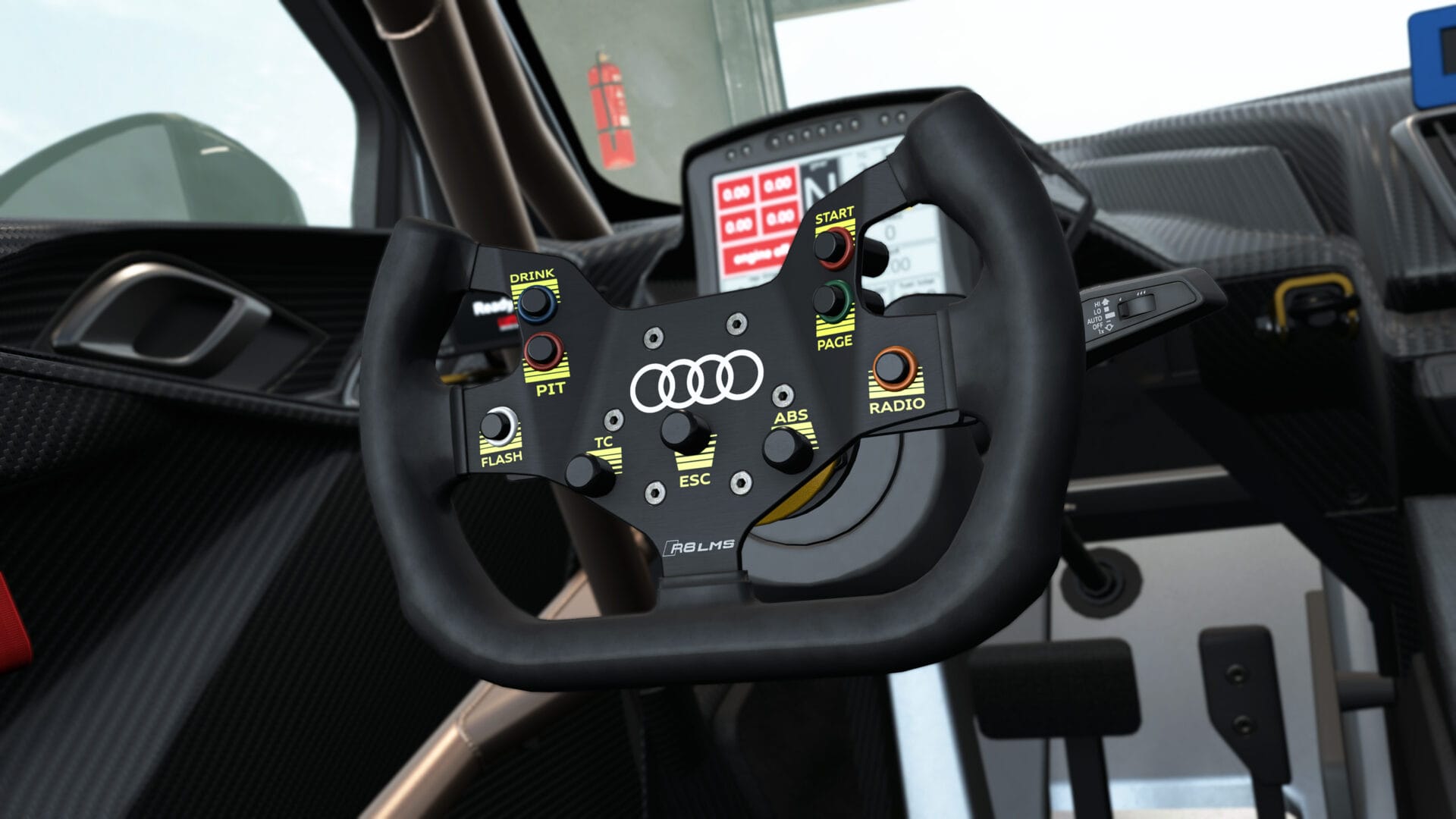
Best Assetto Corsa EVO Settings for MOZA R5 & R5 Pro: 2026 Starting Setup
Read next →
Thrustmaster T598 Assetto Corsa EVO Settings: FFB Setup for PC in 2026
Read next →
Sim Racing Wheel Troubleshooting FAQ: No FFB, Clipping, Oscillation, Pedals and Detection Fixes
Read next →Sources
Key specifications and factual claims are checked against manufacturer or primary-source material where available.
About this article
This page is a researched guide or comparison, not a claim of hands-on testing unless we explicitly say otherwise. Product specifications and availability can change, so important buying details are checked against current source material when the article is updated. Affiliate availability does not determine the underlying recommendation.